
From the President: Keeping human dignity in focus
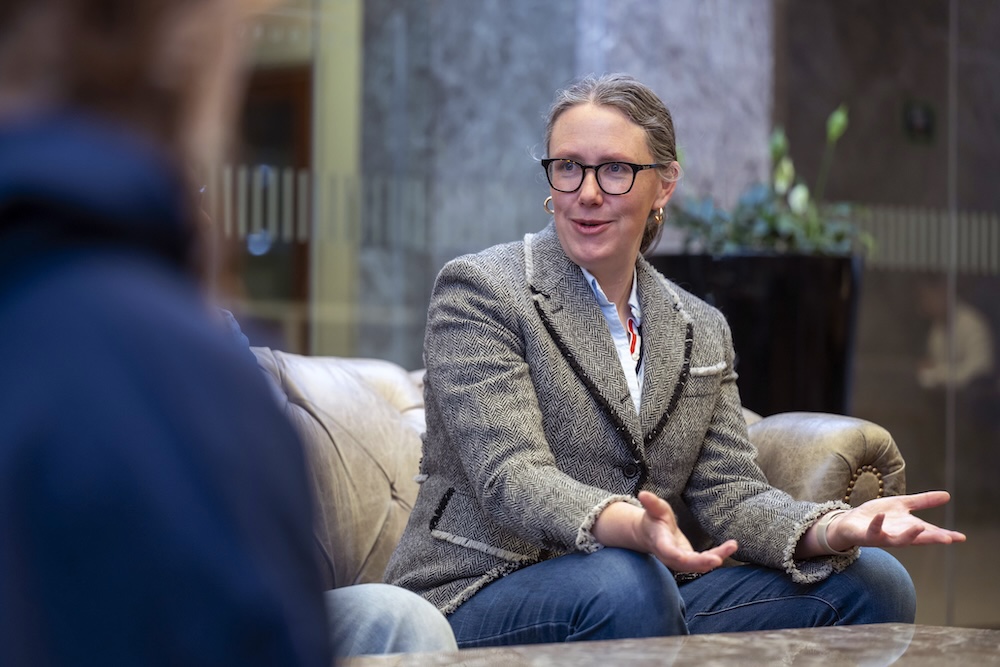
Meghan Sullivan, professor of philosophy at the University of Notre Dame. (Courtesy)
Meghan Sullivan is a professor of philosophy at the University of Notre Dame and the founding director of Notre Dame’s Institute for Ethics and the Common Good. Since 2016, she has taught a course called “God and the Good Life,” and has co-written a book, “The Good Life Method,” based on the course.
Her work at the institute includes overseeing Delta, a project that “provides practical resources for scholars, faith leaders, tech leaders, teachers, journalists, young people and the broader public to help navigate challenges posed by rapidly developing AI.” Delta urges individuals to consider questions of this technology through the lens of dignity, embodiment, love, transcendence and agency.
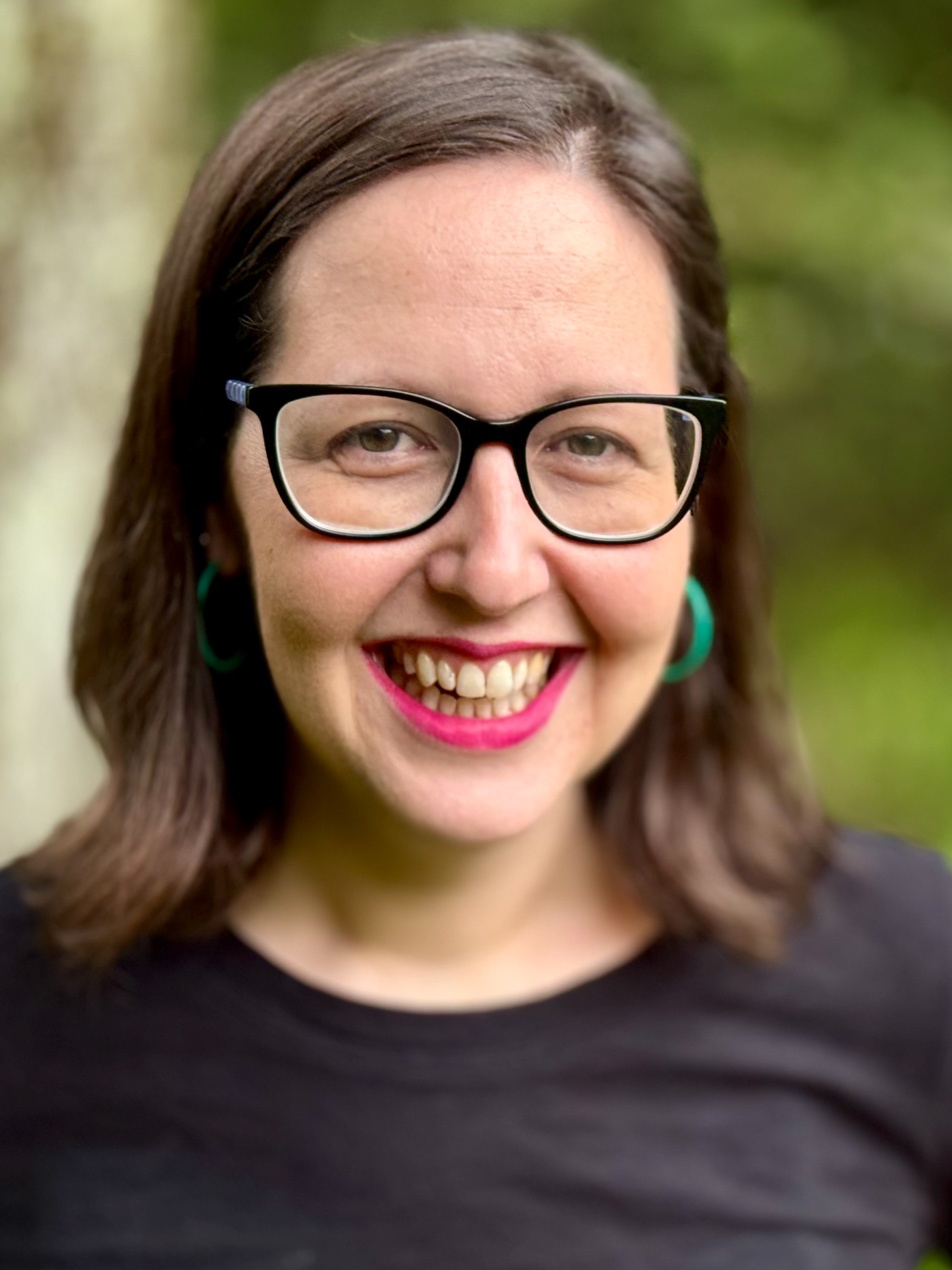
Kerry Weber, CMA President
I spoke with Dr. Sullivan by phone Sept. 14, and our conversation has been condensed and edited for clarity.
We’re at an interesting nexus of your expertise: You’ve taught this class on the good life and much of AI technology promises a version of the good life through technology. I wonder if you could speak a little bit about the way in which you’ve seen that deliver, or not.
It’s funny, so many of my friends and colleagues from philosophy graduate school have now gone to work for AI companies, and there’s a bit of surprise at this choice by these philosophers who were all sitting around drinking beers, reading Nietzsche 20 years ago. I think it’s illustrative of these two different schools of thought about where the good life comes from.
There’s one school of thought that goes back to the ancient world, the utilitarians, which just says: Look, the problem facing all of us is a problem of optimization. And if we want to live a good life, the goal is to get the data about what causes most people like us to be happy, and to then make the decisions that are going to drive us toward that goal. It’s like your life is an engineering problem.
Another major school of thought in ethics says the point of the good life is not constant optimization toward a single goal, but rather living into who or what you are as a human being. That includes aspects of life that can’t be engineered, such as love, contemplation, worship. And this is a school of thought that’s sometimes called virtue ethics. Both of them are goal-directed, in a sense, but they are very different paradigms about whether the problem of achieving the good life is an engineering problem versus a more holistic problem of how to be.
One school of thought says we could probably now just use AI to solve a bunch of lingering problems, and we should have as many economists and engineers as possible making decisions about how to make this technology as powerful as it can be, and to deploy it to every aspect of our lives. And there’s another school of thought, which I think Pope Leo falls into, and which I certainly count myself as a member of, which says, no, salvation was never going to be found in a piece of technology, but rather found in deep inquiry and appreciation for what’s valuable about being a human being.
And that is something your Delta Project is working to address, the formation of people as they approach these technologies. Do you feel like one of the goals of the project is to nudge people toward the virtue ethics model?
Absolutely. In the last 20 years, this utilitarian thinking about technology really has taken root. Very powerful people, such as Elon Musk and Marc Andreessen, are in the grips of it. Many college students take classes in “technology ethics,” where they’re just taught the way to be ethical with technology is to try to figure out how to get the optimum benefit from your uses of technology. Where we feel very convicted, and I think the Catholic world now feels very convicted, is that that has the wrong starting point. That was the big theme of “Magnifica Humanitas”: You can’t start with the assumption that our focus right now should be the technology and what it’s capable of doing. The focus needs to be: What do human beings need, and why are we the center of moral concern?
With the Delta Project, we work a lot with schools, churches and public engagement. We chose those foci because those are places where people’s image of themselves and what they’re worth and what their destiny is are really set. We want to inspire the church, schools and teachers that are forming young people and the broader public to think that being a human being is magnificent and that we need to remain the focus of our imagination in a world that has this technology now in it. That requires a different way of talking about these issues and probably radically different ways of thinking about what this field of “technology ethics” is going to look like.
Those are places that form the kinds of questions people ask for their whole lives. You’ve written a lot about the importance of asking good questions as part of a meaningful life. Do you think AI is more likely to encourage deeper questions or to disrupt that contemplative process?
Both. That’s a terrible philosophical answer, but I really do believe that. On the glass-half-full side, I think there’s never been a better time to be a philosopher or a theologian or a person of faith, because so many folks now are asking these pretty profound existential questions, because they are realizing what this technology can do.
Five or 10 years ago, if I’d assign my students at Notre Dame an essay early on in the semester and said, “What makes human beings special?” students would submit essays saying, “We’re capable of doing mathematics. We’re capable of artistic creativity, and that’s what distinguishes our dignity.” Well, now I’ve got an app on my phone that can do all of those things. So does that mean I have no dignity, or does that mean that that was the wrong answer to begin with? It was the wrong answer all along, but now you finally have this sort of glaring challenge to lazy ways of thinking about what the value of your life is, and you’ve got to wrestle with those questions.
A lot of what you’re mentioning, the math, the art, are also questions of productivity, right? Which Pope Leo mentioned in the encyclical, warning not placing the entire value of the human person on what they produce.
Yes, and it’s one of these things that sounds obvious when you say it out loud, but then you spend a lot of time with high-achieving college students, and you realize their entire sense of self-worth is what they will be capable of producing. We’re trying to deprogram that. It was always true that you are not how much money you make, but now with AI radically reorganizing what human work means, people have to really grapple with that philosophical and theological question.
On the flip side, our capacity to think for ourselves, our capacity to stick with a thought long enough to really understand it and enjoy it, I mean, that was going badly with social media in the last 15 years, and now it’s going super badly with ChatGPT and Claude.
One of the challenges I found in conversations about AI is that oftentimes we lack a shared vocabulary around it. So, what it means to “use AI” can vary from writing a complete draft of an essay to doing just a proofreading check on something you’ve written yourself. How do we move forward with ethical conversations when our practical vocabulary around AI is so diffuse?
This is such a fraught issue, especially among teachers right now. If you want to get two college professors into a screaming match right now, ask them about restricting AI use in the classroom and just what even those policies would mean. I think one of the reasons why it’s becoming so challenging is up until this past year, you had the AI products such as ChatGPT or Claude that you could opt into. People were making an active choice about which kinds of software to access when they’re doing work. Now increasingly that boundary is gone. I’d be astonished if by next year there is any software we regularly use that does not have a powerful LLM behind it. It’s already auto-completing your emails. It’s in the plumbing system in the city of South Bend.
You didn’t have a choice that this technology was going to become omnipresent in your work and all the institutions that you engage with, but it has, and so I think that frustrates a lot of folks. Now we do have to learn to have a new vocabulary, for example, with our students about (how) we want them to (use) their brains as we’re trying to develop and form them, and we need to find new active words for what we do as human beings that distinguish all of the intentional choices we make to be a human in a world where you know the default is increasingly to use the technology, and that is going to be hard. This has been a big transformation that we’re living through. So, what new ways do we want to describe how we’re going to work together?
Lately the news has featured plenty of stories of people leaving AI companies with pretty dire messaging about the future, often with a call to slow down the development of these AI technologies. Practically speaking, any of the AI companies can slow down if they wanted to, but I assume some level of market competition keeps them kind of racing forward. Do you see any real willingness to take the kind of pauses that we see being urged in the news right now?
We’ve worked with some of these tech companies through our Delta project, and some of these companies are very actively engaging the Catholic Church now in ways that give me a bit of hope. That might not be true of all of these tech executives, but many of the folks who are working in frontier labs are sincere in their moral convictions and don’t want to end up on the wrong end of history. They just feel trapped. It’s true they could stop developing their product at any point. I think there’s a bit of this worry that if there’s not a broader slowdown, then if a bad actor develops a very powerful artificial intelligence and a good actor doesn’t develop one that’s powerful enough to try to provide defense against it, then that’s going to make the world even worse. They realize their complicity in helping create this situation, and they’re trying to do their best in a really, really complicated collective action problem.
This isn’t our first rodeo as a civilization dealing with these kinds of problems. We dealt with this in the Cold War, and it took a while. But we do know ways of trying to create order out of chaos through diplomacy, through multilateral agreements, through clear standards, and by empowering independent observers and regulators. There was this petition called “Pacing the Frontier” that was very very important earlier this summer. A bunch of major engineers working on frontier AI, 1,000 of them signed this petition saying we really have to slow down until we can figure out how to ensure this stays under our control.
They’re calling for some sensible regulation. I also think they’re just calling for civil society, for the church, for universities, for other big players in society to focus on this issue a lot more, and not to focus on becoming consumers of AI, but to become savvy about voicing their wishes for how this diffuses across our society. We all have agency over which AI products we choose to use.
We can certainly hold our banks and schools to account for the decisions that they make about AI adoption. One of the things that sometimes frustrates me is nihilism or doomerism that makes it seem like individual people don’t have some ability to express their conscience on these issues. We actually oftentimes have more power than we give ourselves credit for. But it’s a scary moment. And the folks I know who work in these labs are pretty shaken by the developments this summer.
Does anything about the present moment also give you hope?
Oh, for sure. What a time to be alive. We’ve watched a major advance in computing happen. We’ve discovered new things about how computation and information work in our world that nobody ever knew about before, and now we’re figuring out ways of translating it into our lives and our world. And in principle, I think the Catholic world and those of us that work around ideas, we always celebrate great discoveries and opportunities where we understand something much more deeply about the world.
Kerry Weber is president of the Catholic Media Association and Executive Editor at America Media.