
Member Spotlight: George Matysek Jr., Managing Editor, Catholic Review Media
The Catholic Journalist’s Member Spotlight highlights the diverse voices and organizations that make up the Catholic Media Association.
This month we feature George Matysek Jr., managing editor at Catholic Review Media, who shares insights into his work, the challenges of Catholic media today, and the mission that drives his storytelling.
Personal and Professional Background
Tell us about your current role and organization. What does your work look like day to day?
Catholic Review Media is the official news outlet of the Archdiocese of Baltimore. In addition to publishing our print magazine 11 times a year, we produce a weekly radio show and podcast, “Catholic Review Radio,” along with two additional podcasts: “Protagonistas de Fe,” a Spanish-language program, and “In God’s Image,” a recently launched podcast dedicated to the Black Catholic community. We also maintain a strong digital presence, producing daily web-only content, a twice-weekly e-newsletter and engaging regularly with audiences across social media.
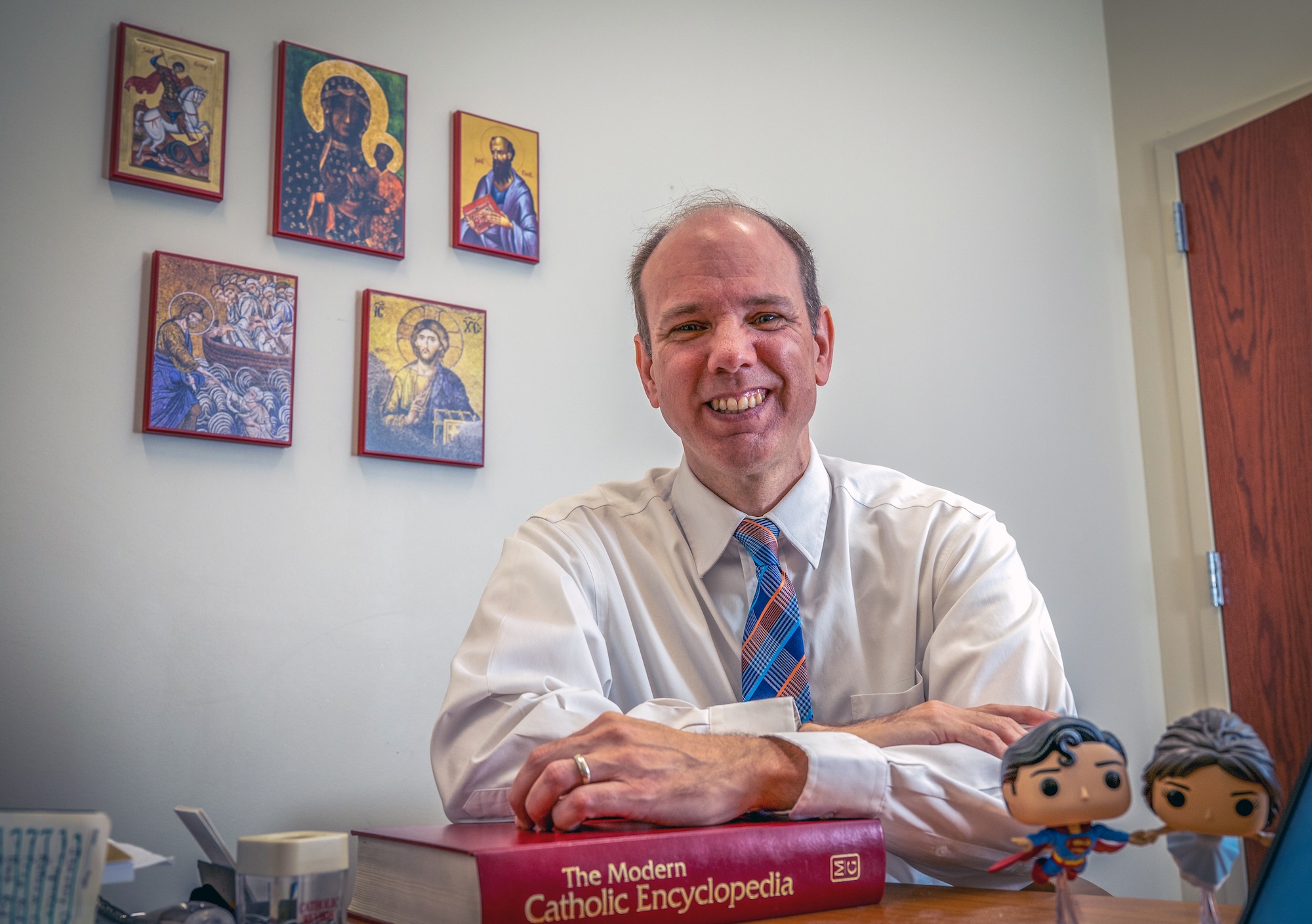
I joined the Catholic Review as a staff writer in 1997, later served for several years as digital editor and became managing editor in 2021. Today, I work with an eight-member newsroom and a freelance team of about 15 contributors. No two days are quite the same. Some days I’m reporting and writing my own stories, recording podcasts, editing stories or producing shows for Catholic Review Radio. Other days, I’m helping writers shape story ideas, editing freelance submissions or planning coverage of upcoming events.
What first inspired you to work in Catholic media? Was there a moment or mentor who influenced you?
I’ve had many wonderful mentors, but the most influential was Christopher Gaul, managing editor when I was hired. My background was in history. I earned my undergraduate degree at what is now Loyola University Maryland, where I helped edit the college newspaper and minored in writing, then went on to complete a master’s degree in history at the University of Maryland, Baltimore County.
When I applied to the Catholic Review, I had no professional newsroom experience — just a love of storytelling and a desire to do meaningful work.
Chris, a former reporter for The Baltimore Sun who later worked in local investigative and medical television reporting, saw potential in me anyway. He was a demanding editor who pushed his reporters beyond what we thought we could do. An elegant writer, he expected the same discipline and care from those around him, consistently emphasizing the power of narrative storytelling.
His mentorship extended beyond office hours. Every few months, he and his wife invited me to their home for dinner, where we would pore over whatever story I was drafting. We talked about journalism — and often about faith — while his ever-present Weimaraner show dogs padded in and out of the room.
Sitting beside Chris in the newsroom was its own education. Listening to him conduct interviews in his distinctive English accent, I absorbed more about the craft of journalism than anything that could be learned in the classroom.
When he retired, Chris left me with words I carry to this day: “Working for the Catholic press is about finding the truth and telling the truth in a way that respects the dignity of everyone involved.”
How does your faith inform your work?
I take my Catholic faith seriously and try to treat everyone I encounter — from the people I interview to my colleagues at the Catholic Review — as a son or daughter of God.
Organization and Mission
What is your organization’s mission, and how does Catholic media help advance it?
Catholic Review Media “provides intergenerational communications that inform, teach, inspire and engage Catholics and all of good will in the mission of Christ through diverse forms of media.” We advance that mission by telling the stories of the church in Baltimore and beyond — shining a light on people, parishes and ministries doing the quiet, faithful work that rarely makes headlines.
What makes your publication/ministry unique in serving your community?
We have knowledge about the Catholic Church that the secular media just can’t match. Our readers trust us to tell the truth.
How has your organization adapted to changes in the media landscape?
Adaptation is in the Catholic Review’s DNA. During Vatican II, Editor Ed Wall arranged for a pilot to fly council documents from Rome so the Review could become the first archdiocesan newspaper to publish the complete Vatican II texts. Under Daniel Medinger, the Review expanded into television, radio and book publishing. It also launched CatholicReview.org. Associate Publisher Christopher Gunty has since guided the publication into the social media age across Facebook, Instagram, X, YouTube and podcasts. Our print product has also evolved, shifting from a weekly newspaper to today’s magazine format.
Media-Specific Focus
How do you balance covering local community life with broader Church issues?
The two come together more often than you might expect. Some of the most rewarding stories I’ve worked on have involved taking a local issue and exploring it from a wider perspective or finding the local angle on a national story. Either way, the goal is the same: to show readers how questions of faith, history and church teaching connect to their own lives.
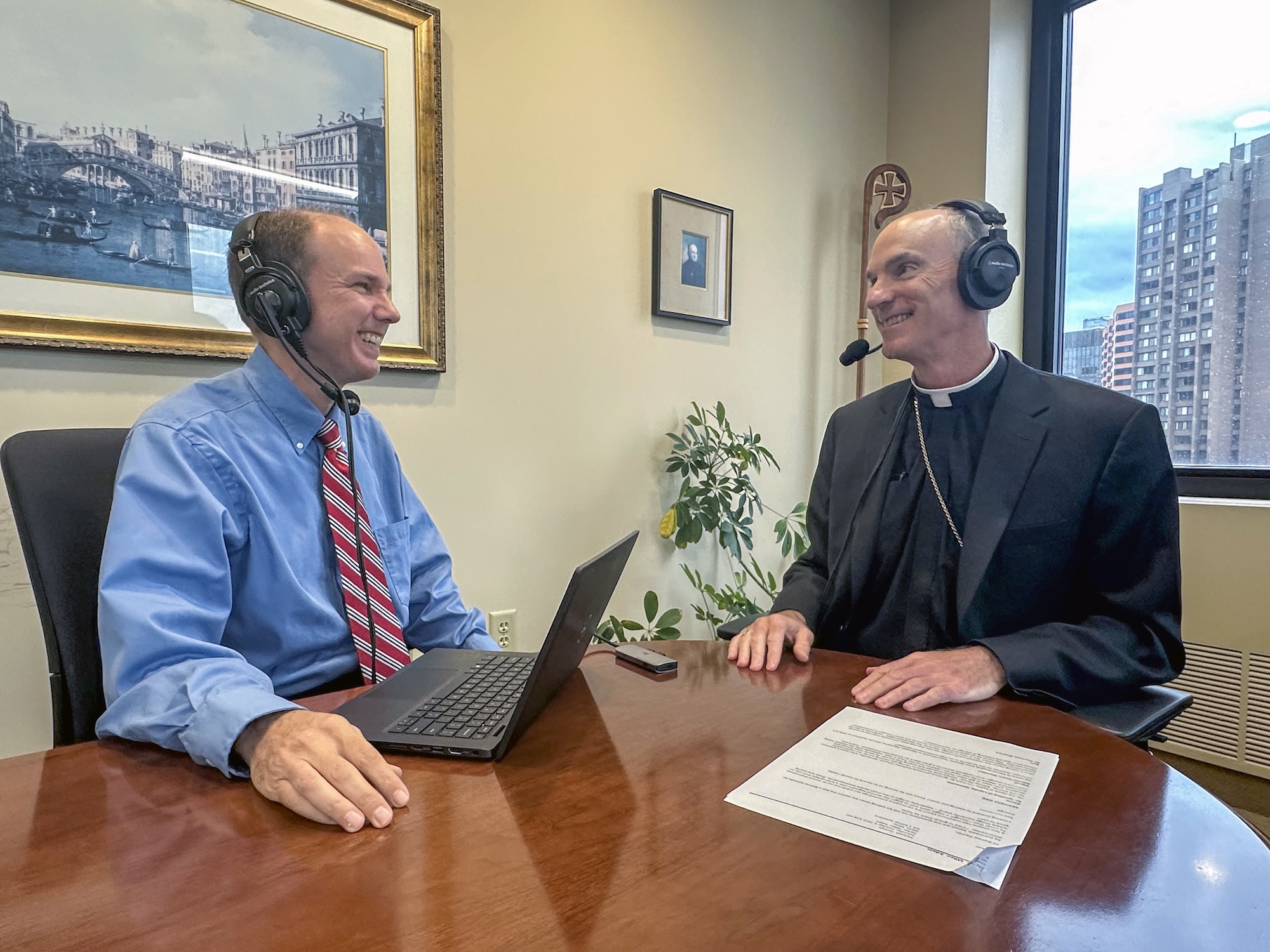
A recent example was a piece marking the 100th anniversary of the Scopes “Monkey Trial.” I interviewed two local scholars and a nationally known author to explore what that landmark case still means for the relationship between faith and science today.
What made it especially satisfying was discovering that the Catholic Review had written about the trial a century earlier. A trip to our archives turned up news reports and a Catholic Review editorial from 1925 that became the perfect closing to the story.
What strategies have you found most effective in engaging diocesan/parish audiences?
Being present matters most — attending parish events and meeting people face to face. We also maintain strong communication with archdiocesan offices and provide an online tip line for story ideas.
Which platforms or formats have been most successful in reaching people?
Our website draws more than 42,000 page views weekly. Our print magazine reaches more than 63,000 subscribers and remains central to our mission. Social media and our e-newsletter help guide readers to our content.
How do you use audio/visual storytelling to deepen faith?
On our social media channels, we share short reels and videos, usually 30 to 60 seconds, to engage viewers with quick, meaningful content. At the same time, we produce longer, more immersive videos that aim to tell a story on their own. One of my favorites showed children from an inner-city parish on a weekend retreat in nature. I still get goosebumps watching the final scene: a camp leader reading a passage from Genesis as the camera pans to a star-filled night sky.
Innovation and Challenges
What innovations have you introduced?
We use a Trello board for workflow management and Chartbeat for web analytics. A complete magazine redesign by Gabriella Ferraro O’Brien gave us a sleeker, more modern look that appeals to younger readers while retaining longtime subscribers.
What is the biggest challenge your organization faces?
When I started nearly three decades ago, we had a staff of about 50. Those numbers have fallen dramatically — but reader expectations haven’t. We meet that challenge with a freelance network and a staff that consistently goes beyond what’s asked.
We’ve also had to be honest about our limits, sometimes saying no to a story or finding creative alternatives — a short video, a podcast, a social post — that serve readers without the resources of a traditional reported piece. We’re also exploring ways to integrate AI without compromising our commitment to trustworthy journalism.
What project are you especially proud of?
There’s a moment in Stephon Dingle’s childhood that tells you everything about who he is. He was 10 years old, standing on a tough East Baltimore street as a crowd gathered behind a police line. A medical examiner’s van blocked his view, so Dingle got down on the ground and looked underneath it. He still remembers the dead man’s face to this day.
Writing the story of how that relentlessly curious boy went on to become a two-time Emmy Award-winning journalist was incredibly rewarding. The piece highlighted how a Catholic high school in Baltimore recognized Dingle’s potential and gave him an opportunity through a scholarship. His story wasn’t just about personal success. It was also about the people who believed in him and helped him thrive.
Community and CMA Connection
How do you connect with and serve your audience beyond publishing?
We’ve sponsored parish choir festivals, lectures for high school athletes, a gun-buyback program, an annual spelling bee for Catholic elementary students and communication workshops. Our photographer recently held an informal gathering teaching parishioners tips for better photos.
How has CMA membership supported your work?
Through the CMA, I’ve built friendships across Catholic media. The annual conference is invaluable for sharing what’s working and what’s not, and the awards program gives our staff meaningful recognition.
Looking Forward
What is the greatest opportunity for Catholic media today?
In a polarized culture, people are searching for trustworthy reporting. Catholic media can be a credible place readers turn for fairness and accuracy.
What advice would you give to the next generation?
When Charles Osgood published his memoir about his boyhood in West Baltimore, I wanted to interview him. I Googled CBS headquarters in New York and called the number. One transfer later, I heard: “Charles Osgood here.”
The lesson I took from that experience — and the advice I’d pass along — is simple: don’t be afraid to ask. The worst anyone can say is no, and you might be surprised how often the answer is yes.
Every person has a story worth telling. Just be curious and unafraid to ask.
What’s next for you and your organization?
I hope Catholic Review Media continues sharing inspiring stories of faith for many generations to come.
Thank you to George Matysek and Catholic Review Media for sharing his story with us.
Know someone who would be a great Member Spotlight? Please email Ann Augherton at aaugherton@catholicherald.com.